 |
 |
 |
|
||
|
||
| ||
|
|
|
|
|
||
|
||
| ||
|
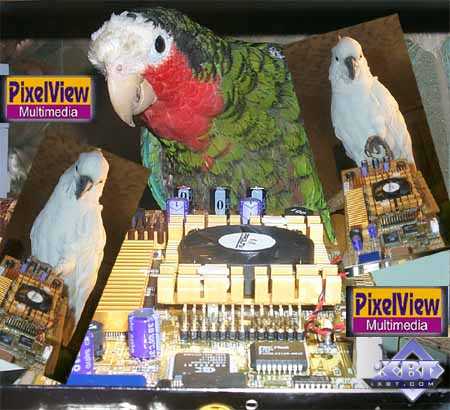 GeForce3 Ti 200 cards, as you know, have all the possibilities of the GeForce3, they just work at a lower frequency. Such cards will probably become the most popular as they have a very attractive price/performance ratio: in the USA they cost less than $180, and there are even some supplies at $120. Of course, the RADEON 8500 LE is a strong competitor against the GF3 Ti 200 but while their drivers for the Windows XP are not bugfixed, the Canadian company will hardly succeed. I'm just pleased with the fact that ATI is now considering opinions of ordinary users and have started eliminating the problems in the new product. And before we turn to the card in question I should remind you that the whole theoretical base connected with this GPU is concentrated in the following articles (here you can also learn the peculiarities of certain cards and find out how they operate in the latest benchmark tests).
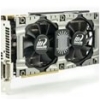
We studied products from Prolink a lot of times and each time the quality was excellent. Prolink video cards, above all, are not dear. And today we will take a look at the Prolink PixelView GeForce3 Ti 200. CardThe Prolink PixelView GeForce3 Ti 200 card has an AGP x2/x4 interface, 64 MBytes DDR SDRAM located in 8 chips on the right side of the PCB. 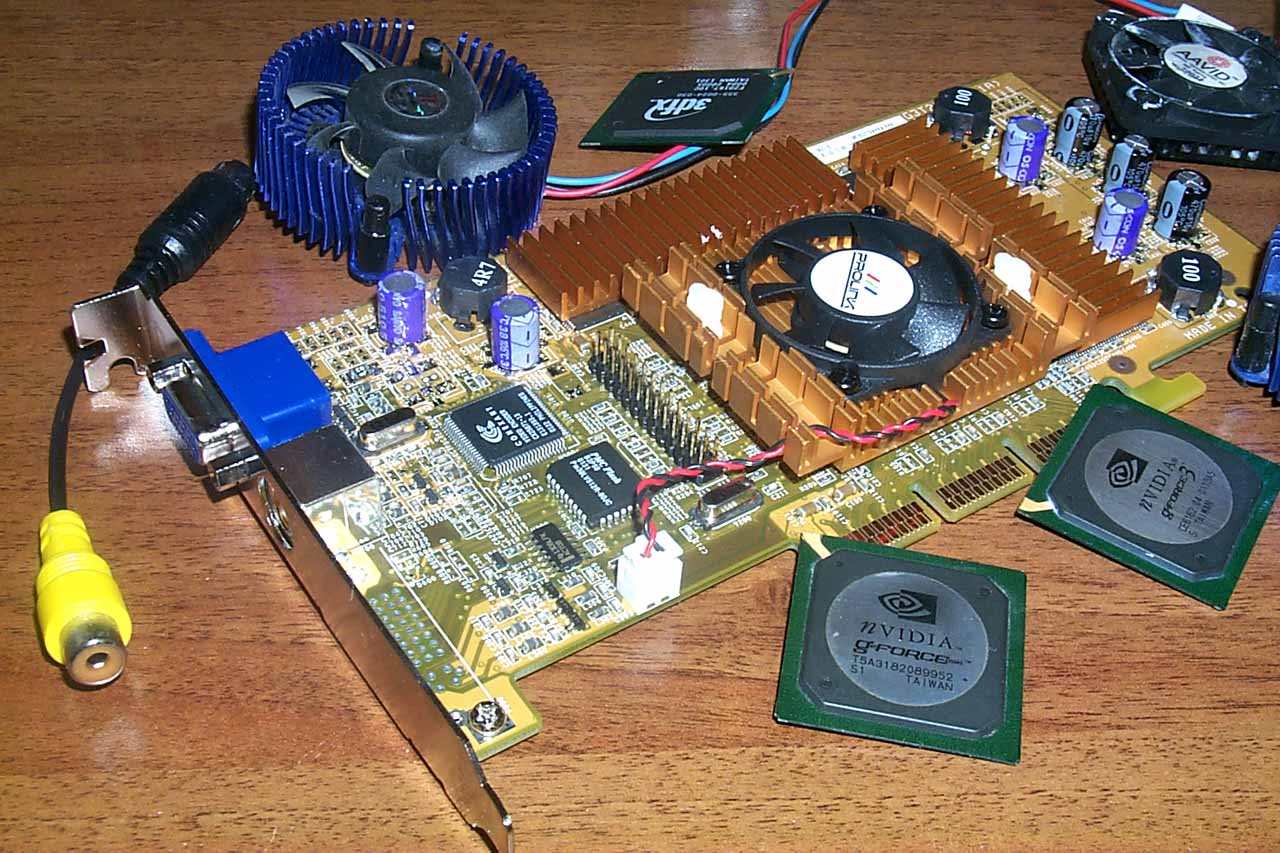 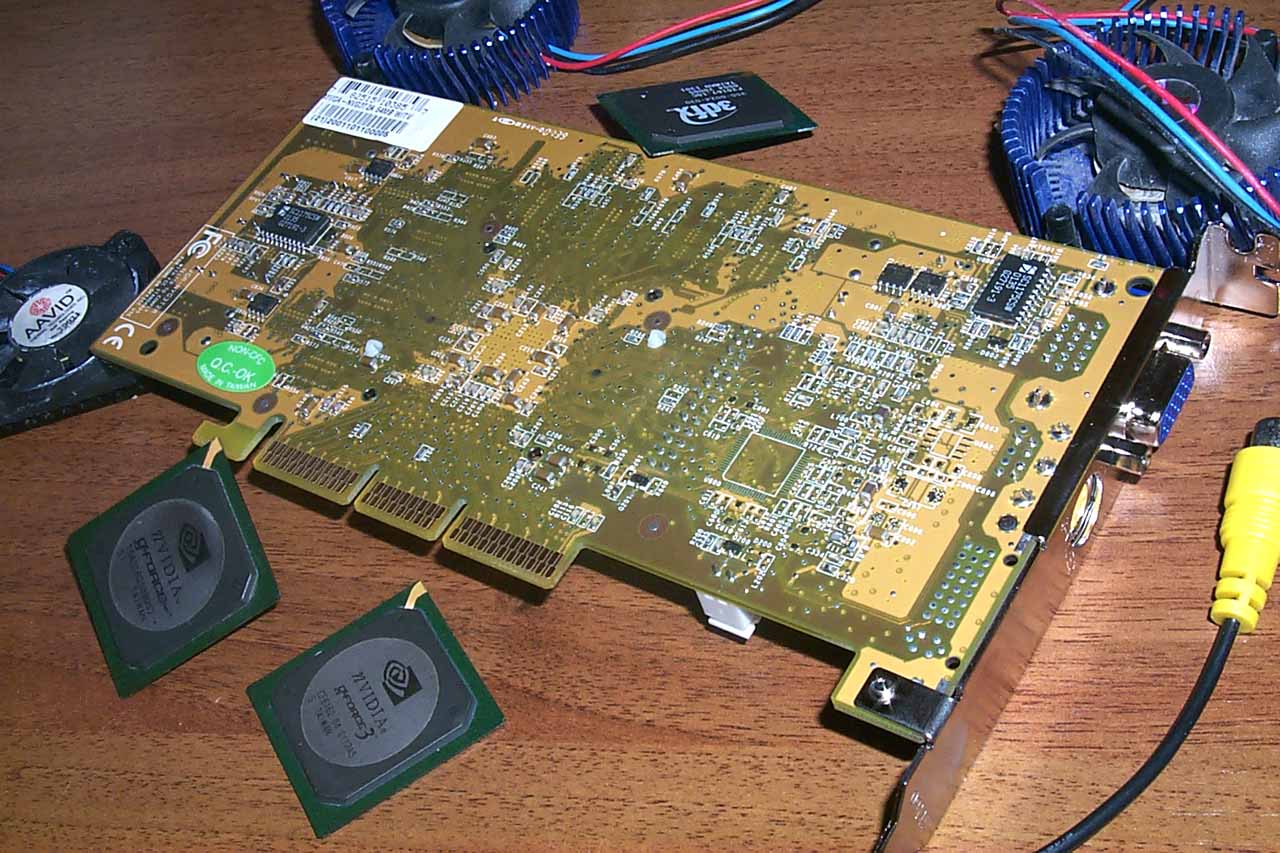 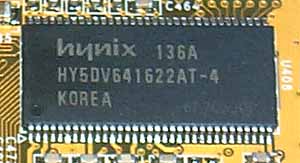 Hynix (former Hyundai) produces memory chips with 4 ns access time, which corresponds to 250(500) MHz. As you know, all Ti 200 based cards have the memory working at 200 (400) MHz that is why 5 ns modules are sufficient. However, such cards are usually equipped with the memory which is available in stock or with a faster memory (which is just a marketing step to attract attention). In the Titanium review we showed that Ti 200/500 based video cards and GeForce3 ones differ in design. Let's look at the design of the Prolink PixelView GeForce3 Ti 200 and compare it with the reference card from NVIDIA: Prolink PixelView GeForce3 Ti 200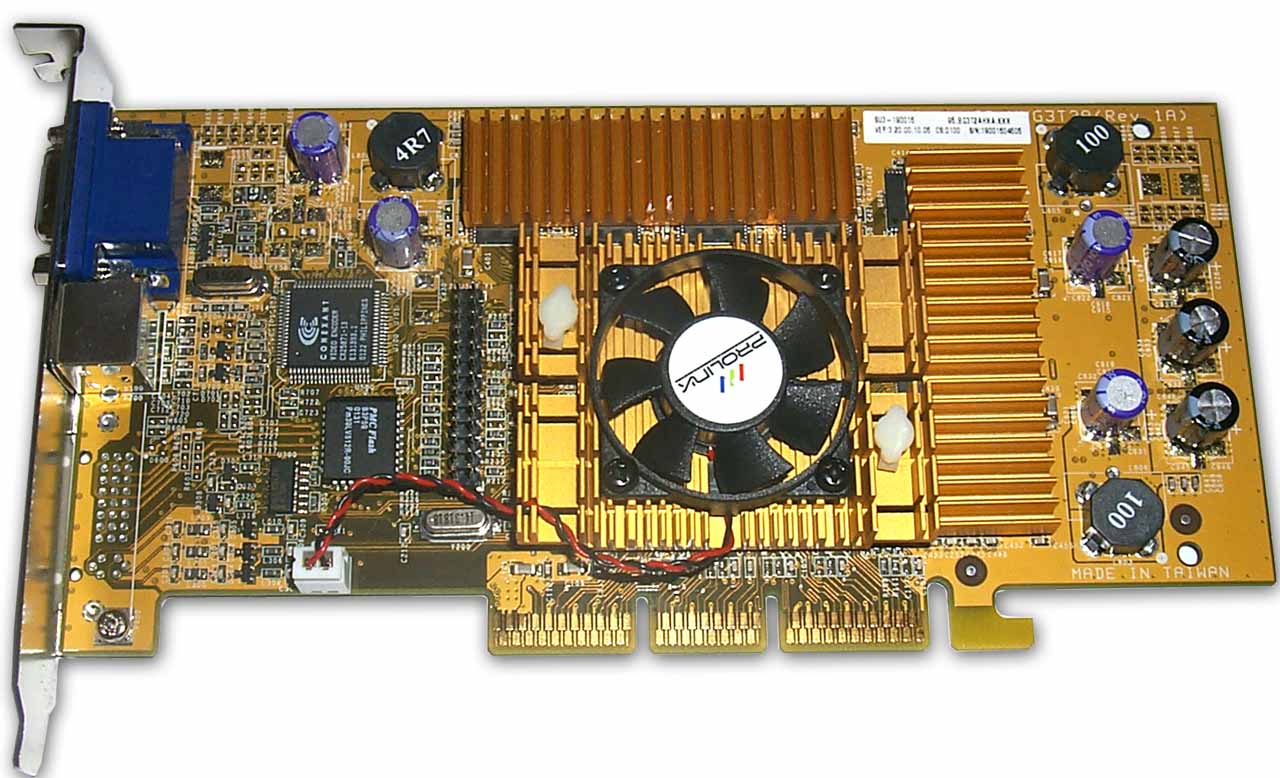 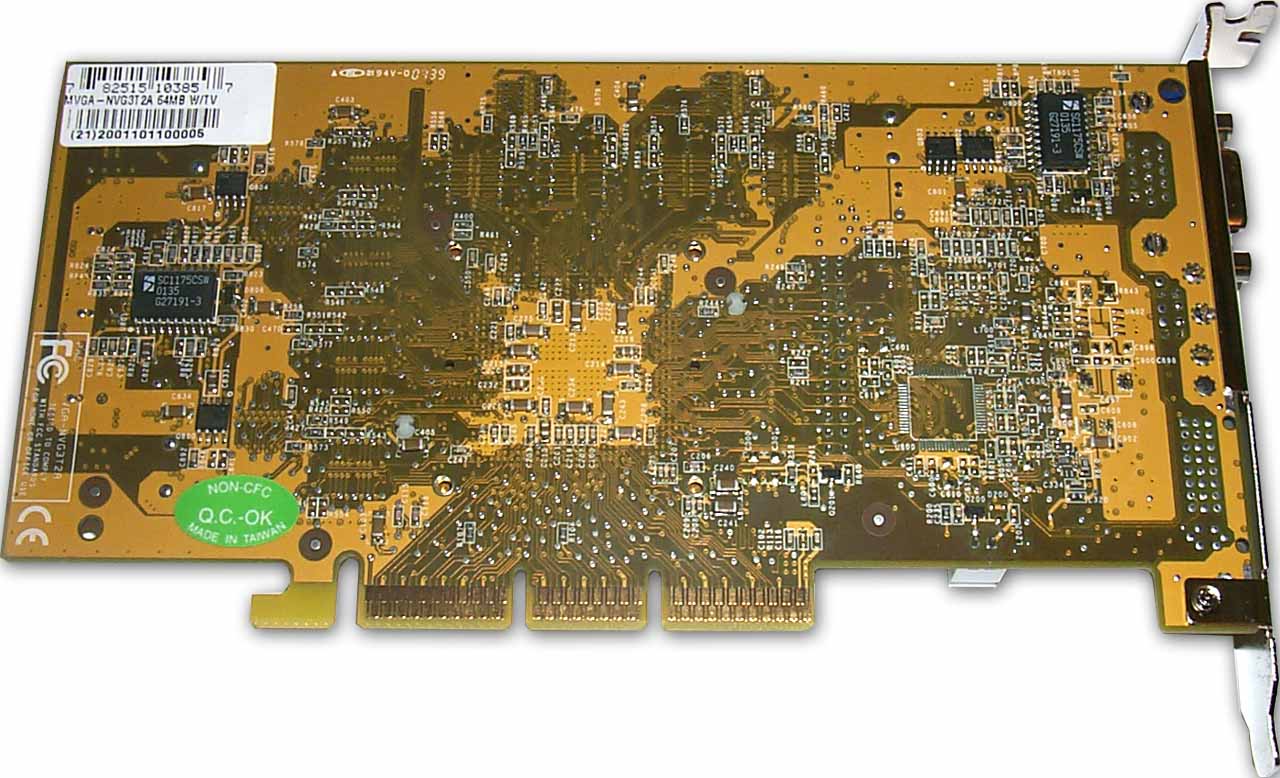 NVIDIA GeForce3 Ti 500 reference card 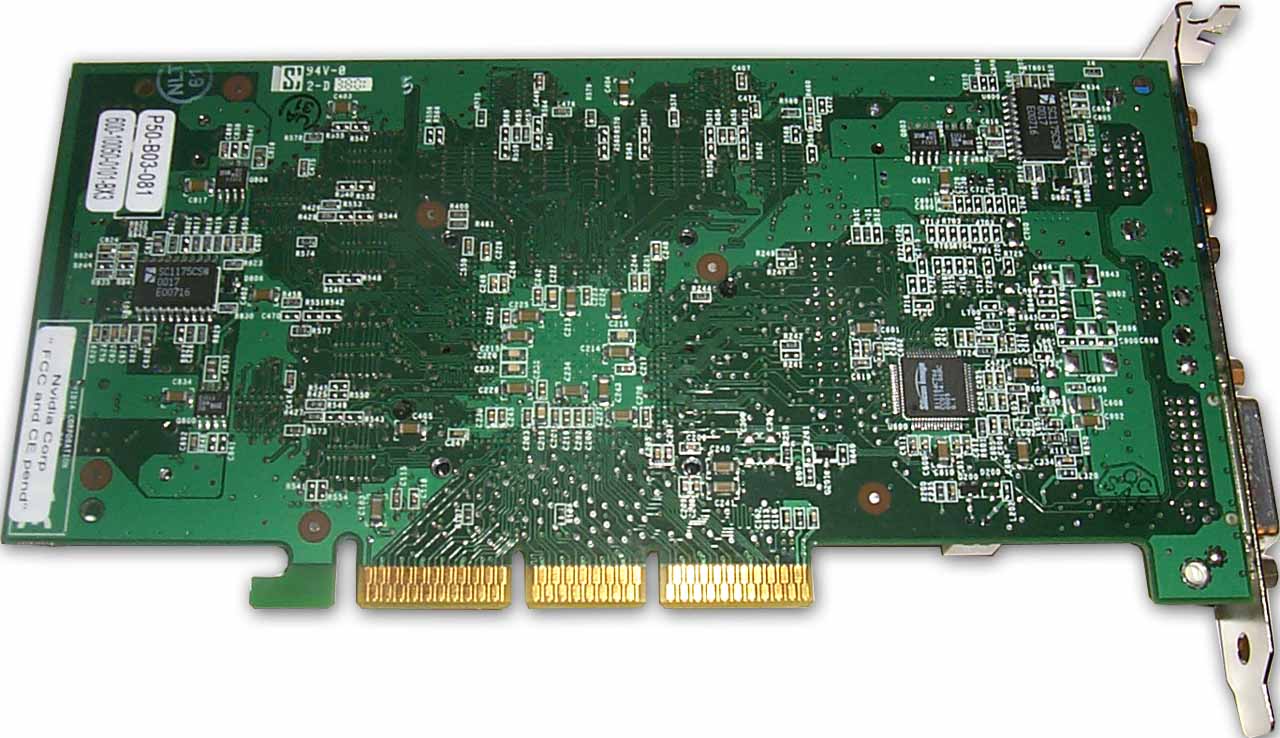 The Prolink and the reference cards are as like as two peas in a pod. I should notice that this is only the second card on the GeForce3 Ti 200 we have examined which is based on the new design developed exactly for this GPU. The PCB has a yellow textolite and standard heatsinks and central cooler. The Prolink PixelView GeForce3 Ti 200 card is equipped with a TV-out. 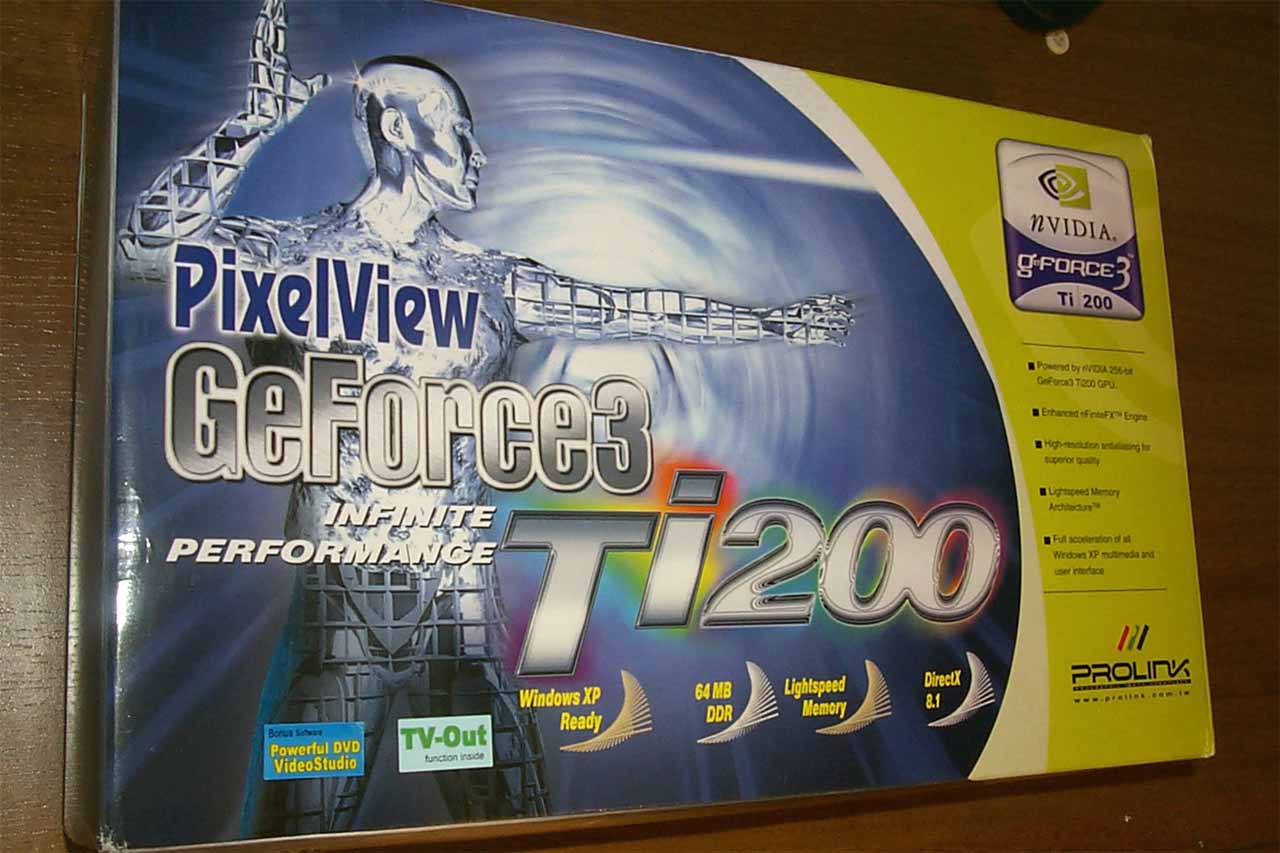 The card ships in a Retail package. Accessories:
OverclockingThe Prolink PixelView GeForce3 Ti 200 doesn't have a promising potential - what we has reached is 200/250(500) MHz. The memory overclocking is not great either since 250 MHz is the rated frequency for the 4ns memory. The performance gained doesn't exceed the one of a usual GeForce3, but at least we can get a normal GeForce3 at a less sum of money. Note:
Installation and driversTest system:
During the tests we used NVIDIA drivers of v21.81, VSync was off, the S3TC technology was enabled. For the comparative analyses we used the following cards:
Test resultsThe 2D quality is very good. At least the card works excellently at 1600x1200, 75 Hz, while at 85 Hz fine elements of my desktop become less sharp. For estimation of 3D quality we used:
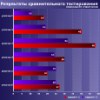
Quake3 Arenademo002, standard modesThe tests with the demo002 were carried out in the High Quality mode (32-bit color). 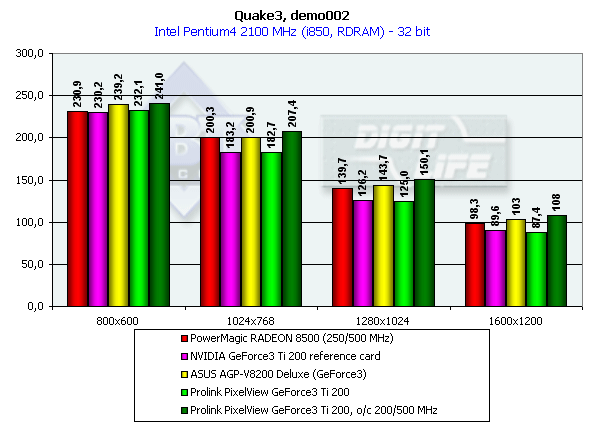 Quaver, High Quality ModesThe tests were carried out in 32-bit color mode at the highest detailing level and with complicated geometry (r_subdivisions "1" r_lodCurveError "30000"). This benchmark loads an accelerator with geometry, large textures and huge effects. 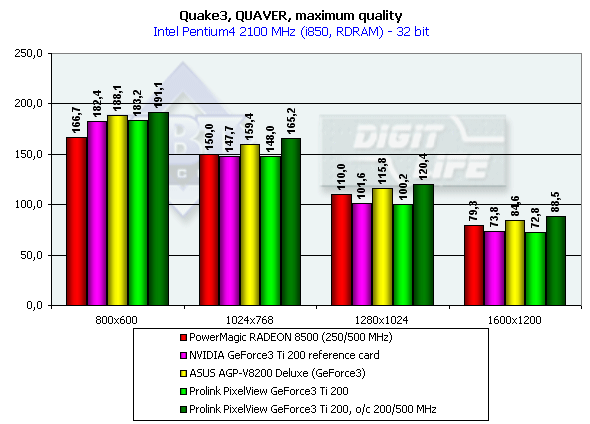 Both tests demonstrate that the card corresponds to its level as far as performance is concerned. In closing, I'd like to advise you to read also other reviews of GeForce2/3 based video cards. Besides, in our 3Digest you can get thorough information on performance of these cards on different platforms. TV-outAs the video cards of this class are not equipped with the TwinView technology you should use utilities from third companies to display image on a monitor and a TV screen simultaneously (you can take, for example, TVTool). The TV-out is standard: 800X600 at 50-60 Hz. Settings for centering and changing image edges on a TVscreen are very scanty. ConclusionIf you want a cheap GeForce3 without luxuries (a rich Retail package, VIVO etc.) this card is a good purchase.
The complete characteristics of video cards of this and other classes can be found in our 3Digest. Highs:
Lows:
Write a comment below. No registration needed!
|
Platform · Video · Multimedia · Mobile · Other || About us & Privacy policy · Twitter · Facebook Copyright © Byrds Research & Publishing, Ltd., 1997–2011. All rights reserved. |