 |
 |
 |
|
||
|
||
| ||
|
|
|
|
|
||
|
||
| ||
|
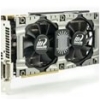
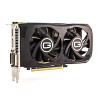
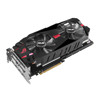
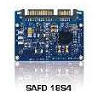
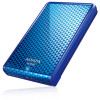
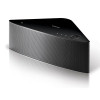
ASUS Launches R9 200, R7 200 Series, Matrix R9 280X Graphics Cards Apacer Launches SATA SLC-lite SSD solutions ADATA Introduces a Stylish External HDD HC630 Samsung Introduces New Wireless Multiroom Speakers WD Gives Consumers a Cloud of Their Own Canadians to Get In-Car Infotainment and Telematics Technology QNAP Launches SAS-Enabled Turbo NAS and 2.5-Inch High-Density Turbo NAS G.SKILL Expands RipjawsZ Family with 15 DDR3 Quad Channel Kits Ambrowse Lets You Build Mobile Apps without Programming Skills AMD Radeon HD 7790 Physical Specifications, Release Date Confirmed ASUS Launches R9 200, R7 200 Series, Matrix R9 280X Graphics Cards ASUS today launched multiple graphics cards powered by the latest AMD Radeon series GPUs. Firstly, there are R7 250 and R7 240 cards featuring ASUS' proprietary Super Alloy Power components for stability, dust-proof fans for improved card lifespan and GPU Tweak tuning software. R7 240 has 730MHz GPU core speed and the R7 250 is clocked at 1000MHz. Both cards have been fully tested for compatibility with Windows 8.1. 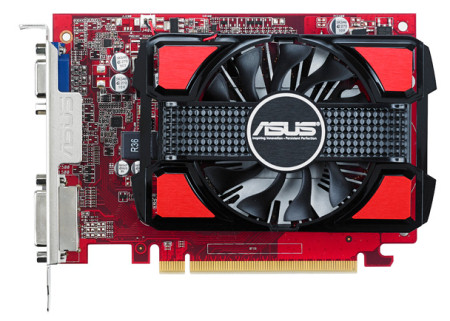 Secondly, there are R9 200 and R7 200 Series DirectCU II graphics cards: R9 280X, R9 270X, and R7 260X, featuring ASUS' DirectCU II cooling, DIGI+ voltage-regulator modules for stable power supply and GPU Tweak tuning software. The R9 280X, R9 270X, and R7 260X are all factory-overclocked to the core speeds of 1070MHz, 1120MHz, and 1188MHz. R9 280X, R9 270X, and R7 260X also include GPU Tweak Streaming, an online-streaming tool that lets users share on-screen action over the Internet.  Lastly, there are Matrix R9 280X Platinum edition and Matrix R9 280X standard edition from ASUS Republic of Gamers (ROG), two new graphics cards powered by the latest AMD Radeon R9 280X GPU. The new Matrix R9 280X graphics cards feature copper-based thermal design for faster performance at lower temperatures, VGA Hotwire connections for voltage control, DIGI+ voltage-regulator modules for smooth and stable power and GPU Tweak tuning software. R9 280X's GPU is clocked at 1000MHz, while that of R9 280X Platinum is cranked up to 1100MHz, 100MHz higher than reference. 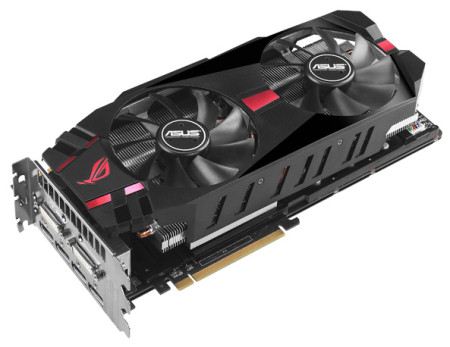 Matrix R9 280X cards also include an overclocking 'safe mode' that can be used to quickly restore default settings. As well, an illuminated Matrix logo allows users to gauge card's loading at a glance as the lamp changes color to indicate the current load level. The Matrix R9 280X cards also include GPU Tweak Streaming, an online-streaming tool that lets users share on-screen action over the Internet. Source: ASUS Apacer Launches SATA SLC-lite SSD solutions In an effort to satisfy the need for SLC-like products priced as MLC ones, Apacer launched SATA SLC-lite series. The new solutions Offer transmission speeds 1.5-3 times faster than those of MLC and close to those of SLC. The new products are also said to serve 10 times longer than MLC at half the price of SLC. 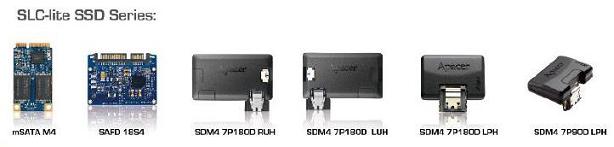 The new SLC-lite series offers capacities up to 64 GB, includes mSATA M4 and SAFD 18S4, which meet the standard of JEDEC MO-300 and MO-297. Besides, the SATA Disk Module series offers 7-pin/22-pin SATA connectors and support 1U server module SSDs, which can be oriented at 90°, 180° or 270°. Apacer SATA 2 SLC-lite is now available. Samples of SATA 3 SLC-lite are expected to be available for testing in Q4. Source: Apacer ADATA Introduces a Stylish External HDD HC630 ADATA, the maker of DRAM modules and NAND Flash products, today introduced DashDrive Choice HC630, a new stylish 2.5-inch external hard drive, capacity ranging from 500GB to 1TB. 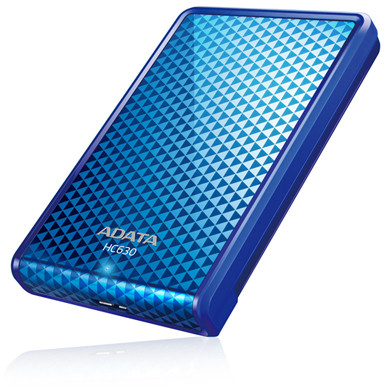 The HC630 has a USB 3.0 interface, weighs 160 grams (5.6 ounces), measures 115 x 78 x 15 mm (4.5 x 3.0 x 0.6 inches), has a data transfer LED indicator, and a raised 'lip' around the edges which protects the surface from scratches. Source: ADATA Samsung Introduces New Wireless Multiroom Speakers Samsung announced today the availability of the Samsung Shape Wireless Audio Multiroom speaker system (WAM750). The flexible new speaker can be used alone or in combination with the Samsung Hub (WAM250) and additional M7 speakers to create a multi-room system. 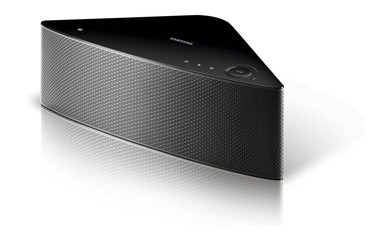 The plug and play installation is easy: just connect the M7 or optional Samsung Hub to a router, plug in, and download the free app to control multiple speakers and audio sources from a smartphone. With the Samsung Hub (WAM250), consumers can connect additional M7 speakers in any room of their home without a router. For one-to-one pairing of an M7 to a smartphone, Bluetooth with NFC functionality is also included. The Samsung Shape M7 supports dual-band WiFi, which ensures an uninterrupted stream across virtually any device. Additionally, the Multi-Channel Mesh Network technology prevents network traffic problems by automatically finding clear audio data paths. Compatible with a variety of apps including Amazon Cloud Player, Pandora, Rhapsody, TuneIn Radio and more, the system can be customized to play different music in different rooms, or the same music throughout the home. Customers can also access content from their own library of music whether it is stored on a smartphone, a laptop or a PC. The speaker delivers warm and natural sound thanks to the Foam Core Woofer, CNT pulp cone mid-range speakers, and silk dome tweeters with advanced speaker enclosures. Samsung's Shape Wireless Audio Multiroom system, which includes one M7 speaker, will be available on October 13th at the retail price of $399.99. The Samsung Hub will also be available on October 13th at a retail price of $49.99. Source: Samsung WD Gives Consumers a Cloud of Their Own WD introduced its new My Cloud family of personal cloud solutions. WD's My Cloud is a complete solution for users to organize, centralize and secure the digital content from all of their computers and mobile devices and access those files from any device, from anywhere in the world. By simply connecting a My Cloud drive to the Internet, consumers get the anywhere, any-device access they can get from the public cloud, without having to pay monthly fees. 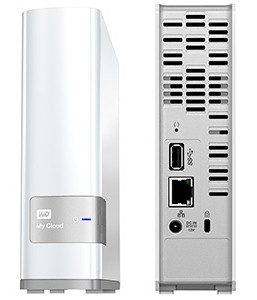 Research firm Gartner estimates that the average household will own approximately 3.3 terabytes (TB) of digital content by 2016. In line with this growth of digital content is the explosive growth of Internet-connected devices, with the current U.S. household owning 5.7 connected devices, according to The NPD Group. Personal cloud storage is the new standard, allowing users to keep media and files at home on their own physical drive and then access them over the Internet with any PC or Mac computer or on tablets and smartphones. As of today, WD offers three My Cloud models: WDBCTL0040HWT (4TB), WDBCTL0030HWT (3TB), and WDBCTL0020HWT (2TB). Each features a Dual-Core CPU, Gigabit Ethernet and USB 3.0 ports. The drives are formatted to NTFS for Windows 8, Windows 7, Windows Vista, Windows XP (SP3) operating systems; Mac OS X Mountain Lion, Lion and Snow Leopard operating systems; DLNA/UPnP devices for streaming. The mobile apps to access My Cloud are available for iOS and Android devices. With them, you can view photos, stream videos, access files, email files, share files as a link, print and open files with third party apps. Additionally, the My Cloud mobile app integrates major public cloud services so that you can transfer files between Dropbox, SkyDrive, and Google Drive public cloud accounts. The 2 TB and 3 TB My Cloud devices are currently available at select U.S. retailers and online. The 4 TB My Cloud is expected to be available in November. MSRP is $149.99 USD for 2 TB, $179.99 USD for 3 TB, and $249.99 USD for 4 TB. The My Cloud mobile app currently is available for download from the App Store and Google Play. A two-drive and four-drive My Cloud configuration will be available in the future. Source: WD Canadians to Get In-Car Infotainment and Telematics Technology Rogers Communications and Sprint agreed that Sprint will bring a comprehensive in-car infotainment and telematics solution to Canadians. Canadians vehicles that use the Sprint Velocity solution will have access to services including infotainment (news, weather, sports and more), navigation, climate control, security, emergency services, and vehicle diagnostics--all available with a convenient in-dash touch screen. Sprint Velocity also provides connectivity for mobile devices in the car including smartphones and tablets. 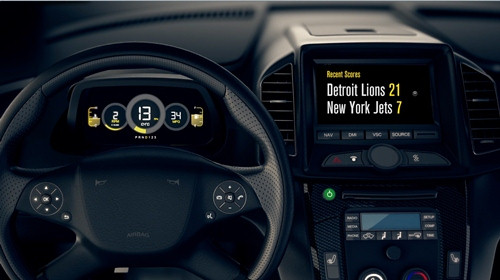 Globally, the connected car market is poised to grow exponentially. According to Juniper Research, nearly 100 million connected cars will be on the road by 2016. Additionally, according to Analysys Mason, the automotive and transport sector will have the highest share of connectivity-related revenue by 2021, driven by the increasing adoption of connected cars. Source: Sprint QNAP Launches SAS-Enabled Turbo NAS and 2.5-Inch High-Density Turbo NAS QNAP today launched five business-class, SAS-enabled Turbo NAS models, including TS-EC1679U-SAS-RP and TS-EC1279U-SAS-RP, which support both SAS and SATA 6Gbps HDDs, and the 2.5-inch high-density SS-EC2479U-SAS-RP, SS-EC1879U-SAS-RP, and SS-EC1279U-SAS-RP. The support of SAS HDDs increases disk I/O performance and offers high reliability for data transmission and storage. The new models offer storage expansion port(s) allowing seamless capacity expansion with QNAP RAID expansion enclosures. 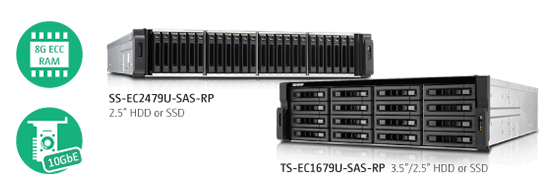 The new SAS-enabled models are equipped with a quad-core Intel Xeon 3.4GHz CPU, 8GB DDR3 ECC RAM, 10GbE option, and support SSD caching for improved performance of IOPS-demanding applications such as virtualization and data center deployment. Highly scalable, the new models support online capacity expansion by connecting multiple QNAP RAID expansion enclosures (REXP-1600U-RP and REXP-1200U-RP) for over 400TB raw total storage. The SAS-enabled Turbo NAS models are certified by major virtualization solutions, support VMware vSphere 5.1 and Citrix XenServer, and are compatible with Microsoft Hyper-V and Windows Server 2012. They also support of VMware VAAI, QNAP vSphere Client plug-in, Microsoft ODX, and QNAP SMI-S provider. The new models offer flexible backup and recovery solutions. Windows and Mac users can use the QNAP NetBak Replicator utility and Apple Time Machine respectively to back up data. Disaster recovery solutions include Real-time Remote Replication (RTRR) to cloud storage including Amazon S3, ElephantDrive, Symform, and Google Drive. Third-party backup software such as Veeam Backup & Replication and Acronis True Image are also supported. Among other features are cross-platform file sharing for Windows, Mac, and Linux/UNIX, support for Windows AD and LDAP directory services and the Windows ACL (Access Control List) feature. Key specifications:
The five new SAS-enabled Turbo NAS models are now available. Source: QNAP G.SKILL Expands RipjawsZ Family with 15 DDR3 Quad Channel Kits G.SKILL has added 15 DDR3 quad channel memory kits to its RipjawsZ family optimized for new Intel Core i7 processor family for socket LGA-2011 and X79 motherboards. 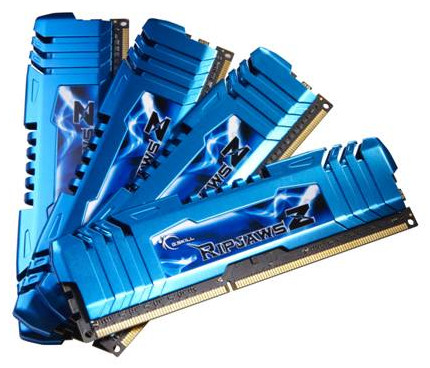 Optimized for the new Intel Ivy Bridge-E Core i7 processors, RipjawsZ series offers rated speeds of up to 2933MHz 16GB(4x4GB) and 2666MHz 64GB (8x8GB). 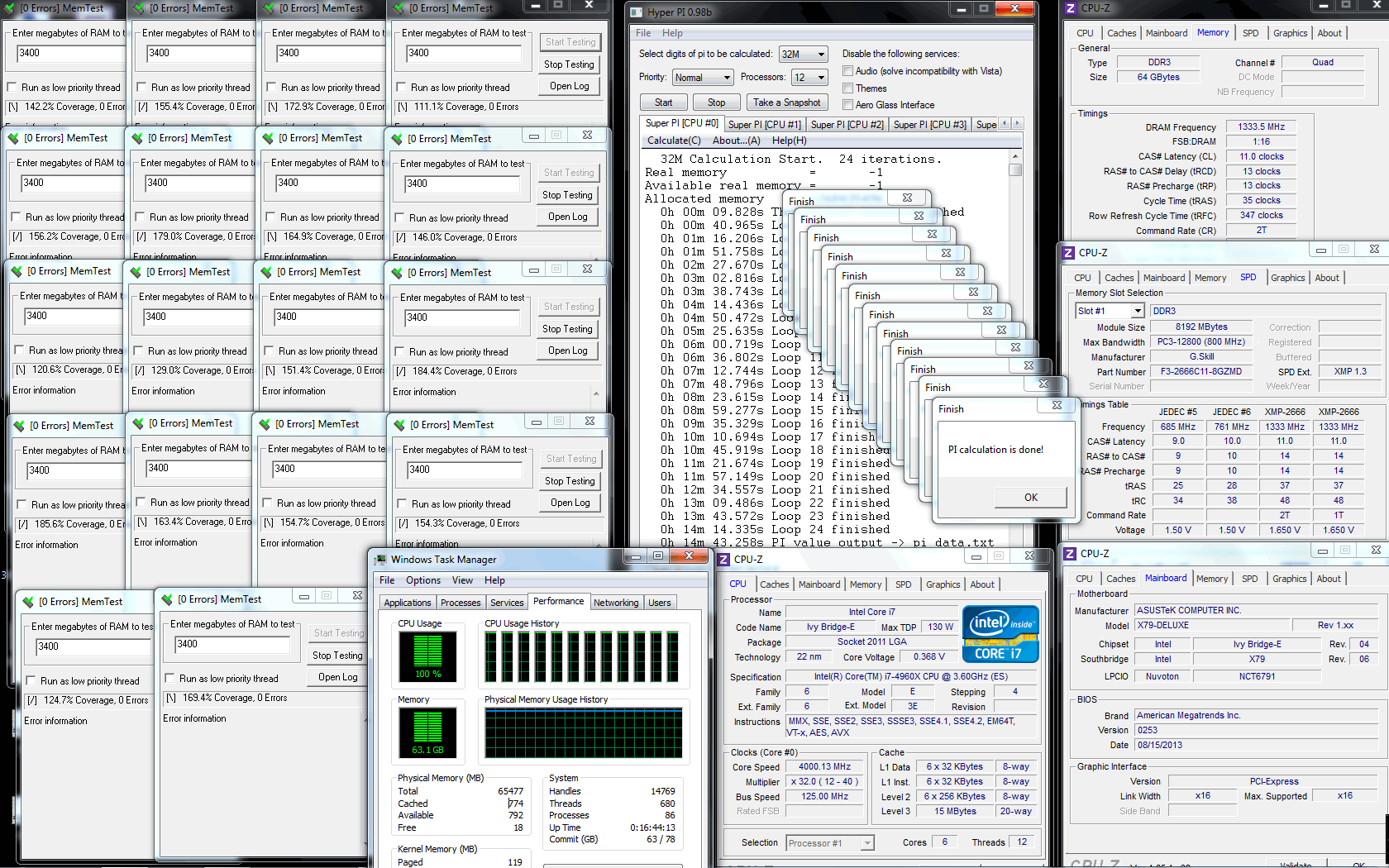 G.SKILL testing lab raised DDR3 memory speed up to 3000MHz with stability – on air cooling! Below is 3000MHz 16GB proof of concept, on the Intel i7-4960X CPU and ASUS Rampage IV Extreme motherboard. 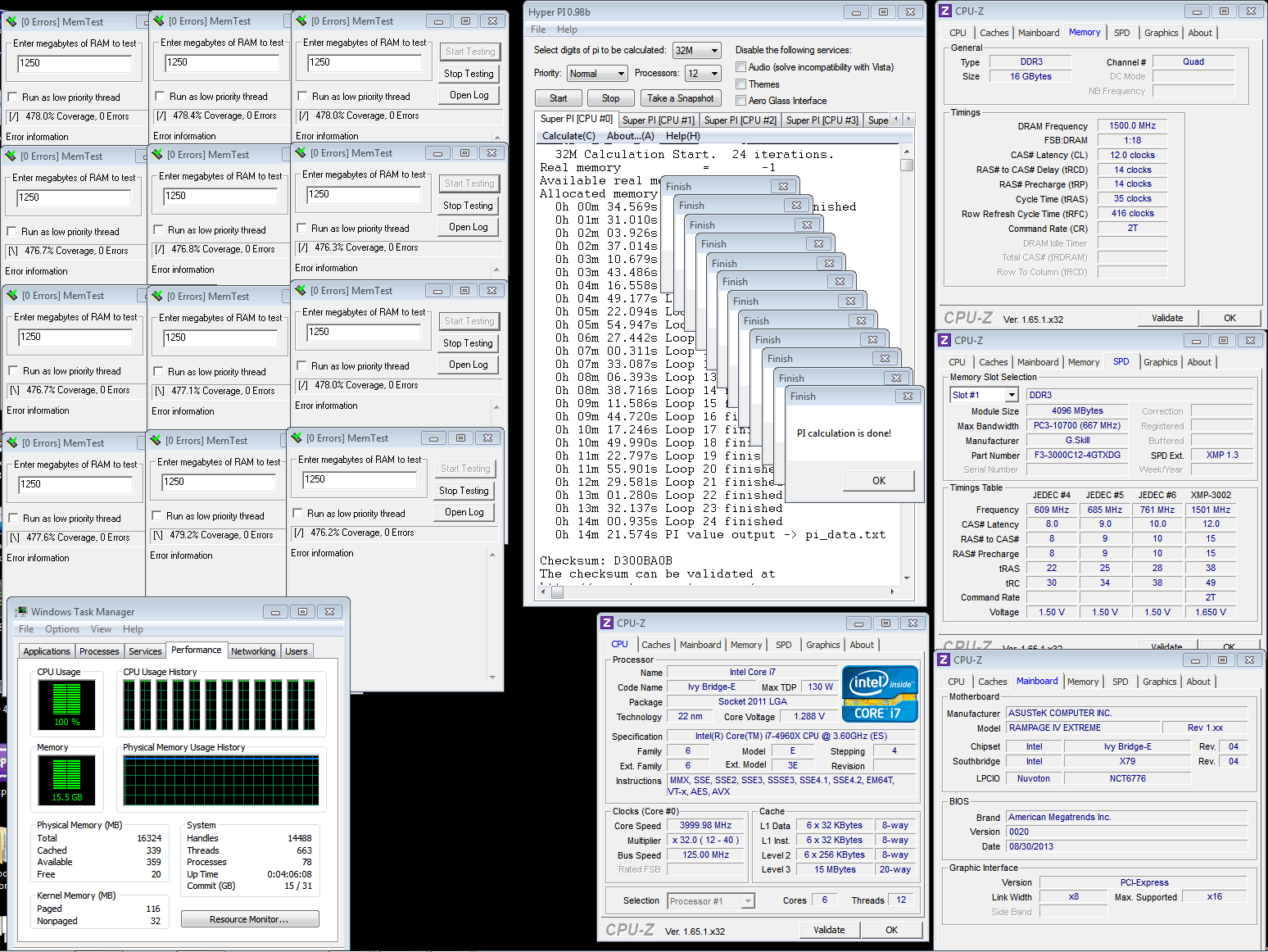 All G.SKILL memory products come with a lifetime warranty. Source: G.SKILL Ambrowse Lets You Build Mobile Apps without Programming Skills I-Commerce, Ltd., has recently developed a tool to build mobile apps for smartphones and tablets (iOS and Android) inside a web browser. As a result, in several minutes you can create your own app without any programming skills and publish it on iTunes and Google Play Store. 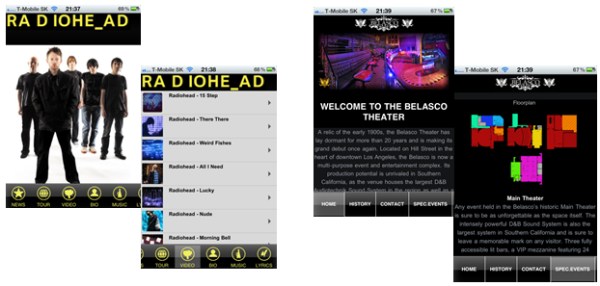 Ambrowse lets users build apps, see what they build, test it, publish it, get the statistics and immediately start advertising campaign and insert ads into their apps. 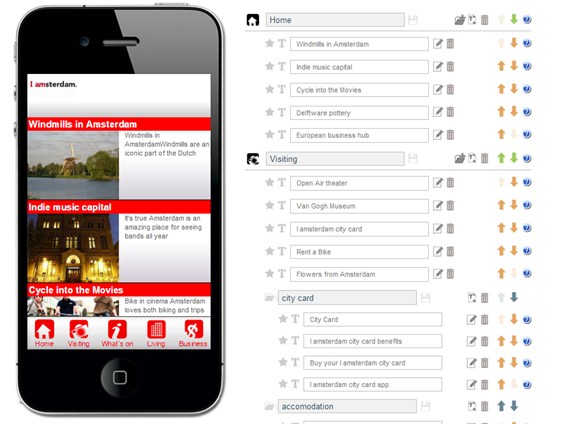 Users can create simple apps or simply select and modify one of the pre-defined templates. The advanced editing tool allows full customization of application design. Through Ambrowse the simple porting of website to native app is possible within few minutes. Finally, the tool also lets several users modify and share the app opened. Source: I-Commerce AMD Radeon HD 7790 Physical Specifications, Release Date Confirmed A presentation slide, allegedly by AMD, leaked by a Japanese distributor confirmed specifications of AMD's upcoming Radeon HD 7790 graphics card. According to the slide, the HD 7790 is indeed based on a brand new silicon, with a transistor count of 2.08 billion ("Cape Verde" has 1.5 and "Pitcairn" boasts 2.80 billion). The silicon is built on the 28 nanometer silicon fab process. 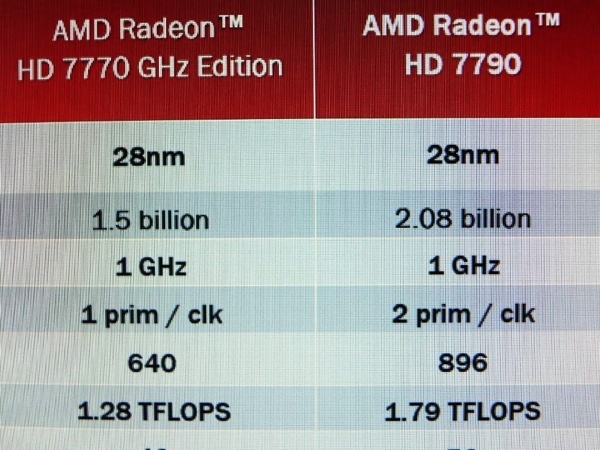 The clock speed mentioned in the slide could be core, which is clocked at 1.00 GHz. Next up is the stream processor count, which stands at 896. The HD 7790 is mentioned to feature a primitive rate of 2 prim/clk, suggesting that its component hierarchy is more similar to "Tahiti" than "Cape Verde," which could mean double the tessellation processing power. All said and done, the HD 7790 belts out 1.79 TFLOPs of floating-point performance. The source goes on to mention in its text that the card features a 128-bit wide memory interface, memory clock speed of 6.00 GHz (96 GB/s), a TDP of 85W, and a single 6-pin PCIe power connector. It is expected to launch no later than tomorrow (22/03). Source: TechPowerUp
Write a comment below. No registration needed!
|
Platform · Video · Multimedia · Mobile · Other || About us & Privacy policy · Twitter · Facebook Copyright © Byrds Research & Publishing, Ltd., 1997–2011. All rights reserved. |