Monthly drivers report and popular 3D
accelerators comparison
The i3DSpeed, a project of iXBT.com and Digit-Life.com, is dedicated to informing you about performance of a large number of graphics cards under Windows XP and Vista.
Traditionally, we offer you summaries of performance of the popular graphics cards, and also inform you about the best price/performance deals in the market.
Issue #6 (95)
April 2008
Added test results of RADEON HD 3870 X2 x2 Quad CrossFire.
Unfortunately, the promised benchmark update is postponed to the next, May issue. In May we are going to renew the testbed; another reason is the release of 3DMark Vantage. Thus, we decided to make all updates simultaneously along with replacing 3DMark05 with the new 3DMark suite and adding World In Conflict instead of one of DX9 CRYSIS benchmarks. The DX9 CoH and CoJ versions will also be replaced by the respective DX10 versions. Besides, some other updates are expected as well.
Contents
- Testbed configurations and test software
- Tested videocards list
- i3DSpeed News
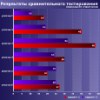
- Test summary diagrams and digest bottom line
- 3D accelerator rating calculations for the end of the month
1. Testbed configuration
- Intel Core2 Duo (775 Socket) based machine
- Intel Core2 Extreme QX9650 (3000 MHz) CPU;
- Gigabyte GA-X38-DQ6 motherboard on Intel X38 chipset;
- 2 GB DDR2 SDRAM Corsair 1066MHz (CAS (tCL)=5; RAS to CAS delay (tRCD)=5; Row Precharge (tRP)=5; tRAS=15);
- WD Caviar SE WD1600JD 160GB SATA HDD.
Operating systems:
- Windows XP Professional Service Pack 2, DirectX 9.0c,
- Windows Vista Ultimate 32bit, DirectX 10;
Monitor: Dell 3007WFP (30").
Benchmarks
2. Graphics cards
Below is a list of graphics cards that we tested linked to the respective 3Digest feature description pages.
In the brackets: core clock rate; ROP/TMU, core clock rate; shader unit, effective memory clock rate).
- PCI-E-ATI RADEON HD 2400 XT 256MB GDDR3 1.2ns (700/700/1600 MHz)
- PCI-E-ATI RADEON HD 2600 PRO 256MB GDDR2 2.0ns (600/600/1000 MHz)
- PCI-E-ATI RADEON HD 2600 PRO 256MB GDDR3 1.2ns (700/700/1400 MHz)
- PCI-E-ATI RADEON HD 2600 XT 256MB GDDR3 1.4ns (800/800/1400 MHz)
- PCI-E-ATI RADEON HD 2600 XT 256MB GDDR4 0.9ns (800/800/2200 MHz)
- PCI-E-ATI RADEON HD 3650 256MB GDDR3 1.1ns (725/725/1600 MHz)
- PCI-E-ATI RADEON HD 3850 256MB GDDR3 1.0ns (670/670/1660 MHz)
- PCI-E-ATI RADEON HD 3850 512MB GDDR3 1.0ns (720/720/1800 MHz)
- PCI-E-ATI RADEON HD 3870 512MB GDDR4 0.8ns (775/775/2250 MHz)
- PCI-E-ATI RADEON HD 3870 512MB GDDR4 0.8ns (850/850/2380 MHz)
- PCI-E-ATI RADEON HD 3870 X2 2x512MB GDDR3 1.0ns (825/825/1800 MHz)
 PCI-E-ATI RADEON HD 3870 X2 x2 Quad CrossFire 4x512MB GDDR3 1.0ns (825/825/1800 MHz) PCI-E-ATI RADEON HD 3870 X2 x2 Quad CrossFire 4x512MB GDDR3 1.0ns (825/825/1800 MHz)- PCI-E-NVIDIA GeForce 8500 GT 256MB GDDR2 2.5ns (450/900/800 MHz)
- PCI-E-NVIDIA GeForce 8600 GT 256MB GDDR3 1.2ns (560/1120/1560 MHz)
- PCI-E-NVIDIA GeForce 8600 GTS 256MB GDDR3 1.0ns (720/1440/2200 MHz)
- PCI-E-NVIDIA GeForce 9600 GT 512MB GDDR3 1.0ns (650/1625/1800 MHz)
- PCI-E-NVIDIA GeForce 8800 GS 384MB GDDR3 1.0ns (680/1674/1600 MHz)
- PCI-E-NVIDIA GeForce 8800 GT 512MB GDDR3 1.0ns (600/1512/1800 MHz)
- PCI-E-NVIDIA GeForce 8800 GTS 512MB GDDR3 1.0ns (650/1620/1940 MHz)
- PCI-E-NVIDIA GeForce 9800 GTX 512MB GDDR3 0.8ns (675/1688/2200 MHz)
- PCI-E-NVIDIA GeForce 9800 GX2 2x512MB GDDR3 1.0ns (600/1512/2000 MHz)
- PCI-E-NVIDIA GeForce 8800 GTX 768MB GDDR3 1.1ns (575/1350/1800 MHz)
- PCI-E-NVIDIA GeForce 8800 Ultra 768MB GDDR3 0.8ns (612/1512/2160 MHz)
Archive
3. April 2008 news and matters
Added a number of new graphics cards (marked "NEW").
- 3.1. Latest drivers by the end of the reporting period:
- NVIDIA ForceWare for all NVIDIA cards:
- ATI Catalyst for all ATI cards:
- 3.2. This month we used 174.74 drivers for NVIDIA-based card summaries, 8.4 drivers for ATI-based card summaries.
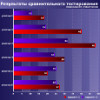
4. Summary charts of graphics card performance with the latest drivers available at the moment of testing in April 2008
All willing to see the complete results in Excel 2003 format can download this RAR 3.0 or ZIP archive.
If you are familiar with 3D graphics, you will be able to draw all the conclusions yourself after looking at the charts provided. Those interested in our judgement of test results should see reviews dedicated to specific GPUs (see our 3D graphics section). And for newbies and those who has just started choosing a graphics card we'll provide some more detailed explanations.
First of all, you should take a look at our brief references of modern graphics card series and their respective GPUs. Note clock rates, shader support and pipeline architecture.
Secondly, in our 3D graphics section all newbies can read about the basics of 3D (this knowledge will be required anyway, because you'll surely try to adjust some game settings like textures, lighting, etc.) Besides, newbies should read separate reviews dedicated to new products. There are just two major GPU vendors: ATI (recently merged with AMD under its brand) and NVIDIA. Thus, all information is generally separated in two parts. We also publish monthly i3DSpeed articles (one of which you are reading now) that sum up all comparisons of graphics cards for various price ranges. In the February 2007 issue we analyzed dependence of modern graphics cards on processors without antialiasing and anisotropic filtering. Similar tests with AA and AF were conducted in March.
Thirdly, let's see the charts and make conclusions.
- 4.1. S.T.A.L.K.E.R.
- 4.2. Call Of Juarez
- 4.3. CRYSIS DirectX 9.0 (high), RESCUE
- 4.4. CRYSIS DirectX 9.0 (high), HARBOR
- 4.5. CRYSIS DirectX 10.0 (Very High), RESCUE
- 4.6. CRYSIS DirectX 10.0 (Very High), HARBOR
- 4.7. Company Of Heroes
- 4.8. 3DMark05 MARKS
- 4.9. 3DMark 06, Shader Model 2.0 MARKS
- 4.10. 3DMark 06, Shader Model 3.0 MARKS
-
4.11. Archive (information from the previous i3DSpeed issues absent in this one)
- 4.12. Notes on graphics cards performance with the latest drivers:
- If a particular card is not in the summary, it means the given benchmark didn't work or worked incorrectly with it.
- If you imagine a line connecting ends of columns representing test results on a chart, you can judge if a game is critical to a card or a CPU. If this curve is "convex" and many cards perform similarly, it means at this resolution and under this load performance is bottlenecked by system resources, not graphics card potential. If, vice versa, the curve is "concave" and performance drops quickly as card potential reduces, it means the game puts heavy load on graphics cards and depends exclusively on their potential.
5. 3D accelerator ratings calculations for the end of the month
Calculations are based on gaming benchmark results as well as the results from 3DMark06 new tests (ATI CATALYST 8.4, NVIDIA ForceWare 174.74).
All willing to conduct their own rating calculations with own values are invited to download this Excel XP table in RAR 3.0 or ZIP format.
The method of rating calculation is described here.
Calculations were conducted considering the following assumptions:
- Percentage of performance and quality demand ratio:
- performance priority - 60%
- quality priority - 40%
- Only the HIGHEST resolution available in games was used to calculate prospect ratings.
- The usability rating indicates performance and features of a card (numerator) related to its price (denominator).
According to your wishes, we separated ratings into two groups: the first gathers all benchmarks, and the second contains only the gaming tests without m3DMark05/06. Disbelieving the synthetic tests, many think the second group is of higher importance.
Core2 Extreme QX9650-based testbed:
Usability rating:
Gaming-only usability rating
| # |
Card |
Usability rating |
Prospect rating |
Approx. price |
| 01. |
8800 GT 512MB, 600/1512/1800 |
287 |
500 |
205 |
| 02. |
9600 GT 512MB, 650/1625/1800 |
281 |
466 |
180 |
| 03. |
8800 GS 384MB, 680/1674/1600 |
240 |
420 |
193 |
| 04. |
8800 GTS 512MB, 650/1620/1940 |
236 |
536 |
279 |
| 05. |
HD 3870 512MB, 850/850/2380 |
225 |
458 |
227 |
| 06. |
HD 3850 256MB, 670/670/1660 |
211 |
367 |
166 |
| 07. |
HD 3870 512MB, 775/775/2250 |
196 |
428 |
226 |
| 08. |
HD 3850 512MB, 720/720/1800 |
194 |
402 |
210 |
| 09. |
9800 GTX 512MB, 675/1688/2200 |
152 |
551 |
450 |
| 10. |
HD 3870 X2 2x512MB, 825/825/1800 |
136 |
535 |
484 |
| 11. |
8800 GTX 768MB, 575/1350/1800 |
134 |
543 |
495 |
| 12. |
HD 3650 256MB, 725/725/1600 |
130 |
209 |
95 |
| 13. |
8600 GTS 256MB, 720/1440/2200 |
128 |
247 |
132 |
| 14. |
HD 2600 XT 256MB, 800/800/1400 |
127 |
194 |
86 |
| 15. |
HD 2600 PRO 256MB, 700/700/1400 |
121 |
184 |
75 |
| 16. |
HD 2600 XT 256MB, 800/800/2200 |
117 |
219 |
116 |
| 17. |
9800 GX2 2x512MB, 600/1512/2000 |
117 |
601 |
757 |
| 18. |
8600 GT 256MB, 560/1120/1560 |
114 |
200 |
90 |
| 19. |
HD 2600 PRO 256MB, 600/700/1000 |
110 |
171 |
65 |
| 20. |
8500 GT 256MB, 450/900/800 |
108 |
167 |
54 |
| 21. |
HD 2400 XT 256MB, 700/700/1600 |
98 |
147 |
50 |
| 22. |
8800 Ultra 768MB, 612/1512/2160 |
95 |
572 |
757 |
| 23. |
HD 3870 X2 CF 4x512, 825/825/1800 |
88 |
654 |
968 |
General usability rating
| # |
Card |
Usability rating |
Prospect rating |
Approx. price |
| 01. |
8800 GT 512MB, 600/1512/1800 |
1351 |
1123 |
205 |
| 02. |
9600 GT 512MB, 650/1625/1800 |
1330 |
1041 |
180 |
| 03. |
8800 GS 384MB, 680/1674/1600 |
1151 |
964 |
193 |
| 04. |
8800 GTS 512MB, 650/1620/1940 |
1097 |
1194 |
279 |
| 05. |
HD 3870 512MB, 850/850/2380 |
1089 |
1047 |
227 |
| 06. |
HD 3850 256MB, 670/670/1660 |
1066 |
860 |
166 |
| 07. |
HD 3870 512MB, 775/775/2250 |
976 |
989 |
226 |
| 08. |
HD 3850 512MB, 720/720/1800 |
971 |
938 |
210 |
| 09. |
HD 3650 256MB, 725/725/1600 |
714 |
513 |
95 |
| 10. |
HD 2600 XT 256MB, 800/800/1400 |
713 |
484 |
86 |
| 11. |
9800 GTX 512MB, 675/1688/2200 |
706 |
1224 |
450 |
| 12. |
HD 2600 PRO 256MB, 700/700/1400 |
695 |
455 |
75 |
| 13. |
8600 GTS 256MB, 720/1440/2200 |
691 |
597 |
132 |
| 14. |
HD 3870 X2 2x512MB, 825/825/1800 |
689 |
1260 |
484 |
| 15. |
HD 2600 XT 256MB, 800/800/2200 |
636 |
536 |
116 |
| 16. |
HD 2600 PRO 256MB, 600/700/1000 |
636 |
420 |
65 |
| 17. |
8600 GT 256MB, 560/1120/1560 |
631 |
485 |
90 |
| 18. |
8800 GTX 768MB, 575/1350/1800 |
613 |
1197 |
495 |
| 19. |
8500 GT 256MB, 450/900/800 |
576 |
385 |
54 |
| 20. |
9800 GX2 2x512MB, 600/1512/2000 |
548 |
1382 |
757 |
| 21. |
HD 2400 XT 256MB, 700/700/1600 |
545 |
348 |
50 |
| 22. |
8800 Ultra 768MB, 612/1512/2160 |
438 |
1260 |
757 |
| 23. |
HD 3870 X2 CF 4x512, 825/825/1800 |
431 |
1505 |
968 |
Prospect Rating:
Gaming-only prospect rating
| # |
Card |
Usability rating |
Prospect rating |
Approx. price |
| 01. |
HD 3870 X2 CF 4x512, 825/825/1800 |
88 |
654 |
968 |
| 02. |
9800 GX2 2x512MB, 600/1512/2000 |
117 |
601 |
757 |
| 03. |
8800 Ultra 768MB, 612/1512/2160 |
95 |
572 |
757 |
| 04. |
9800 GTX 512MB, 675/1688/2200 |
152 |
551 |
450 |
| 05. |
8800 GTX 768MB, 575/1350/1800 |
134 |
543 |
495 |
| 06. |
8800 GTS 512MB, 650/1620/1940 |
236 |
536 |
279 |
| 07. |
HD 3870 X2 2x512MB, 825/825/1800 |
136 |
535 |
484 |
| 08. |
8800 GT 512MB, 600/1512/1800 |
287 |
500 |
205 |
| 09. |
9600 GT 512MB, 650/1625/1800 |
281 |
466 |
180 |
| 10. |
HD 3870 512MB, 850/850/2380 |
225 |
458 |
227 |
| 11. |
HD 3870 512MB, 775/775/2250 |
196 |
428 |
226 |
| 12. |
8800 GS 384MB, 680/1674/1600 |
240 |
420 |
193 |
| 13. |
HD 3850 512MB, 720/720/1800 |
194 |
402 |
210 |
| 14. |
HD 3850 256MB, 670/670/1660 |
211 |
367 |
166 |
| 15. |
8600 GTS 256MB, 720/1440/2200 |
128 |
247 |
132 |
| 16. |
HD 2600 XT 256MB, 800/800/2200 |
117 |
219 |
116 |
| 17. |
HD 3650 256MB, 725/725/1600 |
130 |
209 |
95 |
| 18. |
8600 GT 256MB, 560/1120/1560 |
114 |
200 |
90 |
| 19. |
HD 2600 XT 256MB, 800/800/1400 |
127 |
194 |
86 |
| 20. |
HD 2600 PRO 256MB, 700/700/1400 |
121 |
184 |
75 |
| 21. |
HD 2600 PRO 256MB, 600/700/1000 |
110 |
171 |
65 |
| 22. |
8500 GT 256MB, 450/900/800 |
108 |
167 |
54 |
| 23. |
HD 2400 XT 256MB, 700/700/1600 |
98 |
147 |
50 |
General prospect rating
| # |
Card |
Usability rating |
Prospect rating |
Approx. price |
| 01. |
HD 3870 X2 CF 4x512, 825/825/1800 |
431 |
1505 |
968 |
| 02. |
9800 GX2 2x512MB, 600/1512/2000 |
548 |
1382 |
757 |
| 03. |
HD 3870 X2 2x512MB, 825/825/1800 |
689 |
1260 |
484 |
| 04. |
8800 Ultra 768MB, 612/1512/2160 |
438 |
1260 |
757 |
| 05. |
9800 GTX 512MB, 675/1688/2200 |
706 |
1224 |
450 |
| 06. |
8800 GTX 768MB, 575/1350/1800 |
613 |
1197 |
495 |
| 07. |
8800 GTS 512MB, 650/1620/1940 |
1097 |
1194 |
279 |
| 08. |
8800 GT 512MB, 600/1512/1800 |
1351 |
1123 |
205 |
| 09. |
HD 3870 512MB, 850/850/2380 |
1089 |
1047 |
227 |
| 10. |
9600 GT 512MB, 650/1625/1800 |
1330 |
1041 |
180 |
| 11. |
HD 3870 512MB, 775/775/2250 |
976 |
989 |
226 |
| 12. |
8800 GS 384MB, 680/1674/1600 |
1151 |
964 |
193 |
| 13. |
HD 3850 512MB, 720/720/1800 |
971 |
938 |
210 |
| 14. |
HD 3850 256MB, 670/670/1660 |
1066 |
860 |
166 |
| 15. |
8600 GTS 256MB, 720/1440/2200 |
691 |
597 |
132 |
| 16. |
HD 2600 XT 256MB, 800/800/2200 |
636 |
536 |
116 |
| 17. |
HD 3650 256MB, 725/725/1600 |
714 |
513 |
95 |
| 18. |
8600 GT 256MB, 560/1120/1560 |
631 |
485 |
90 |
| 19. |
HD 2600 XT 256MB, 800/800/1400 |
713 |
484 |
86 |
| 20. |
HD 2600 PRO 256MB, 700/700/1400 |
695 |
455 |
75 |
| 21. |
HD 2600 PRO 256MB, 600/700/1000 |
636 |
420 |
65 |
| 22. |
8500 GT 256MB, 450/900/800 |
576 |
385 |
54 |
| 23. |
HD 2400 XT 256MB, 700/700/1600 |
545 |
348 |
50 |
We thank companies that provided us with graphics cards and other equipment:
TUL (PowerColor),
Chaintech,
Zotac,
BFG and Mikhail Proshletsov,
EVGA and Victoria Nikolaeva,
Foxconn and Alexander Troukhachev,
MSI,
Gainward,
HIS and Vitaly Milov,
NVIDIA,
AMD,
Sapphire Technology,
ASUStek,
PSU kindly provided by HIPER.

|
|
Dell 3007WFP monitor kindly provided by NVIDIA.

|
08.04.2008
Write a comment below. No registration needed!
|
|
 |
|
|
|